One decision at a time
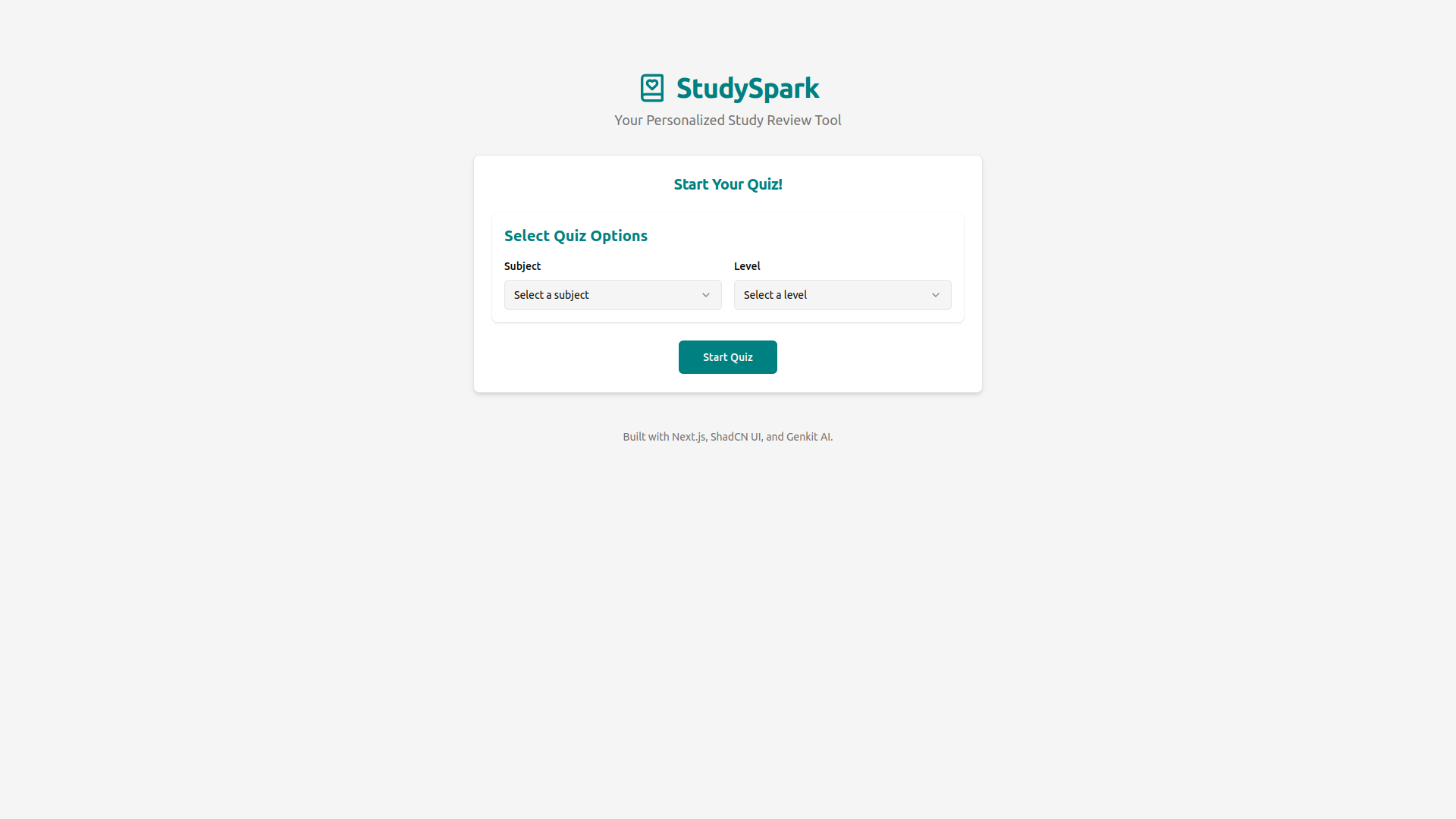
Subject and level are grouped into a single focused start state instead of exposing the complexity of the generation system.
Adaptation only feels intelligent when the interface remains simple.
A personalized quiz experience designed to make the next study action feel obvious, focused, and achievable.
01 / Challenge
Personalized learning can quickly become configuration-heavy. The product needed to collect enough context to generate a useful quiz while keeping the first interaction calm and approachable.
02 / Decisions
Subject and level are grouped into a single focused start state instead of exposing the complexity of the generation system.
A quiet visual hierarchy gives the adaptive engine room to become more complex only after the learner starts.
The product model centers review paths and performance gaps rather than presenting AI as the main event.
03 / Architecture
Subject and difficulty context
AI-assisted quiz creation
Firebase-backed progress and review data
Next.js and React responsive experience
04 / Outcome
The prototype established a straightforward entry point for an adaptive learning loop, from quiz setup to targeted review.